
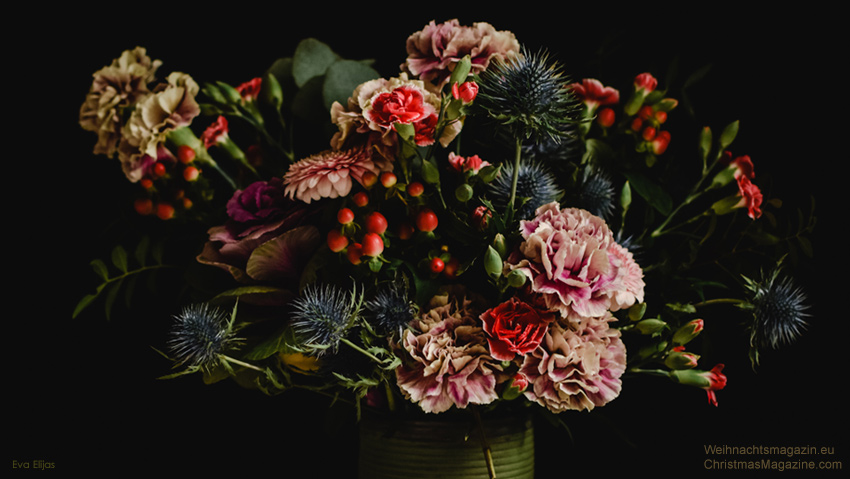
A Bouquet Inspired by the Colours of Baroque

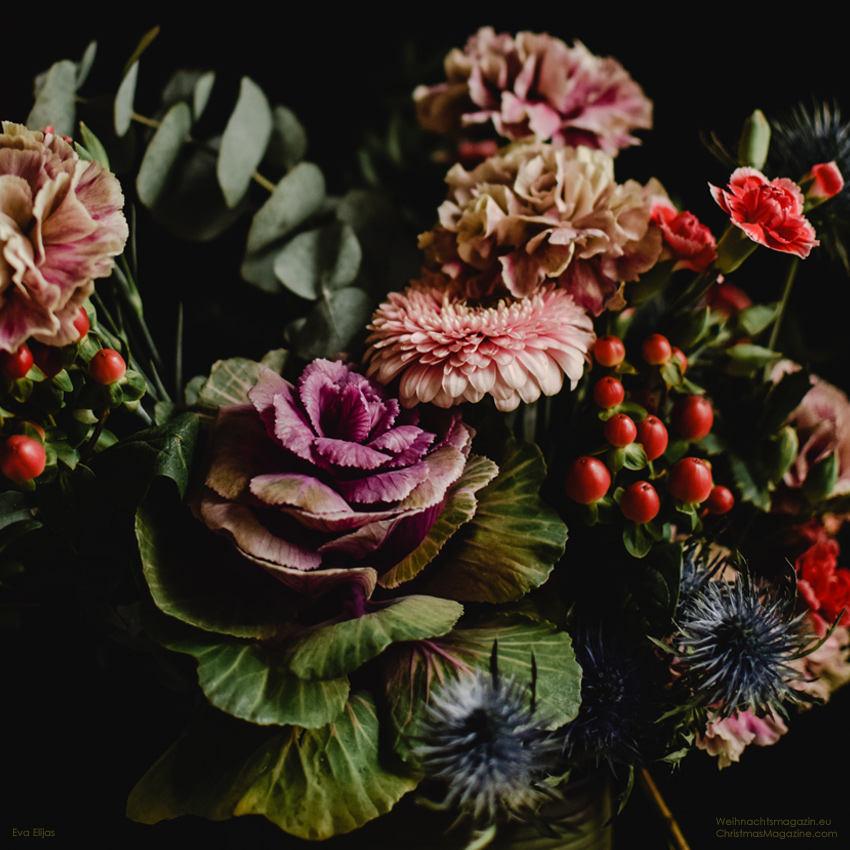
I love dark colours in winter. They make a home feel especially cozy, adding a sense of visual warmth and depth to the rooms. This beautiful bouquet was inspired by the rich, dramatic palette of the Baroque period — deep reds, velvety burgundies, purple and moody greens. It almost resembles an old master painting, full of contrast and quiet drama.
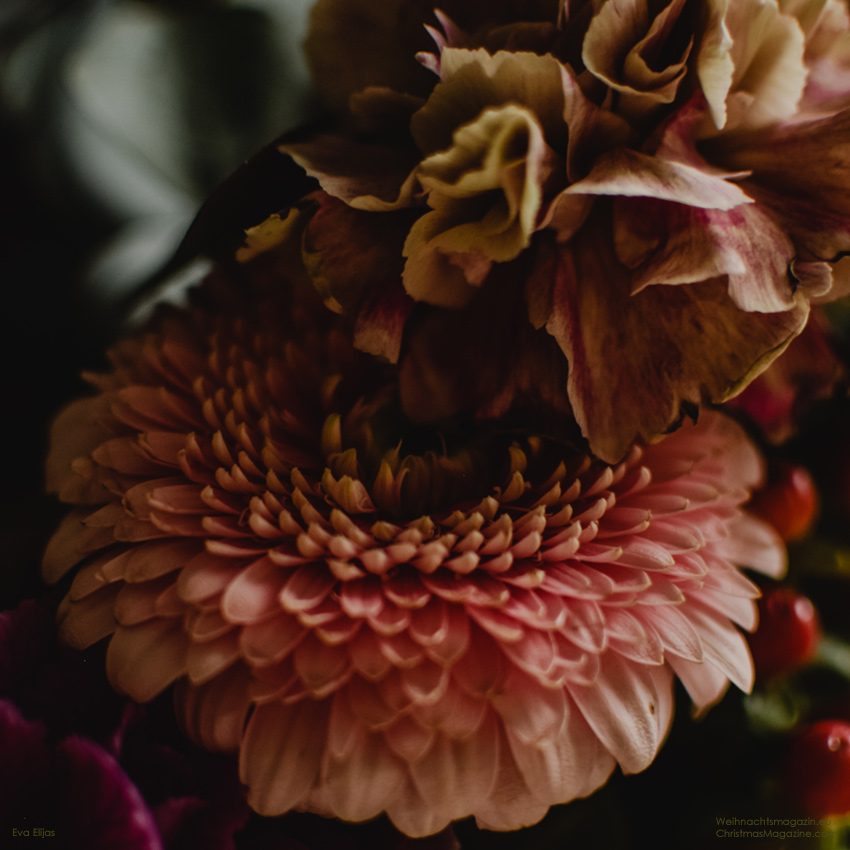
If your décor leans more toward whites and lighter tones, simply replace the darker blooms with white flowers and perhaps a few in the softest shade of blush pink. This subtle adjustment instantly transforms the arrangement, giving it a fresher, more delicate presence. The bouquet will feel airy and luminous rather than dramatic, blending effortlessly into a bright, Scandinavian-inspired setting or a winter scheme filled with frosted textures and gentle neutrals.
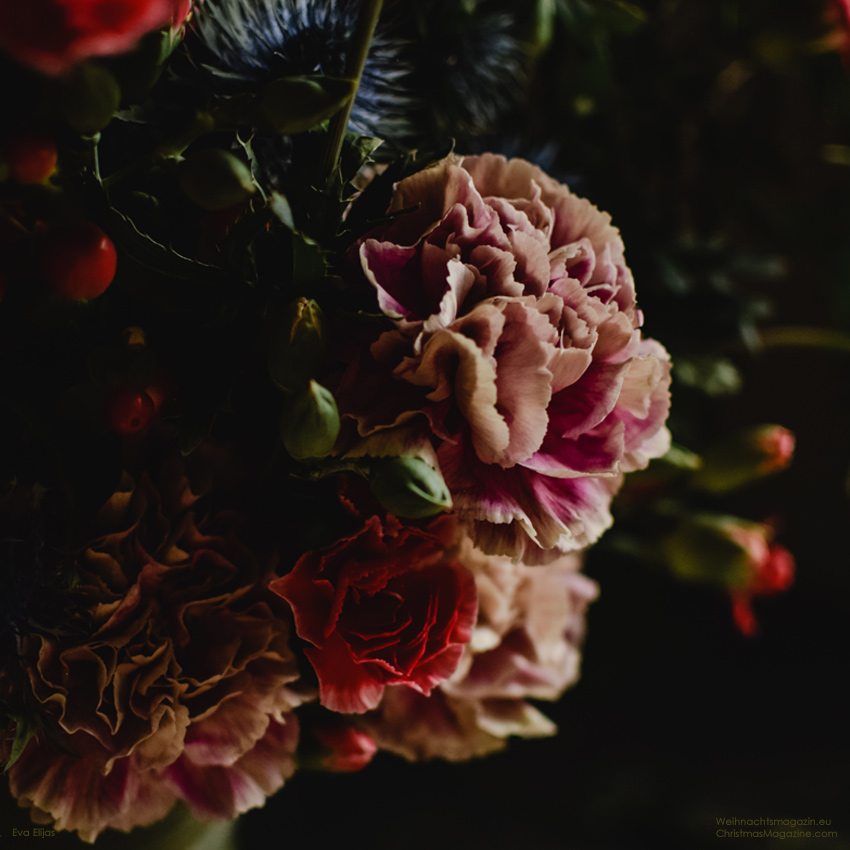
Flowers and Greeney used for this Bouquet
Small red carnations
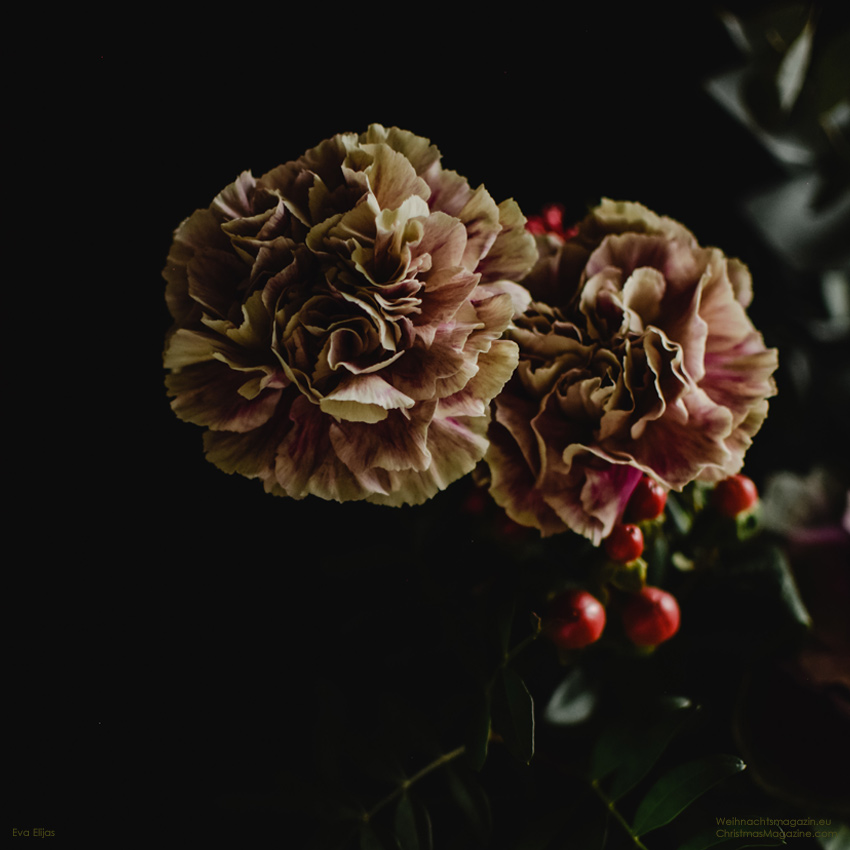
Cream and magenta colored carnations
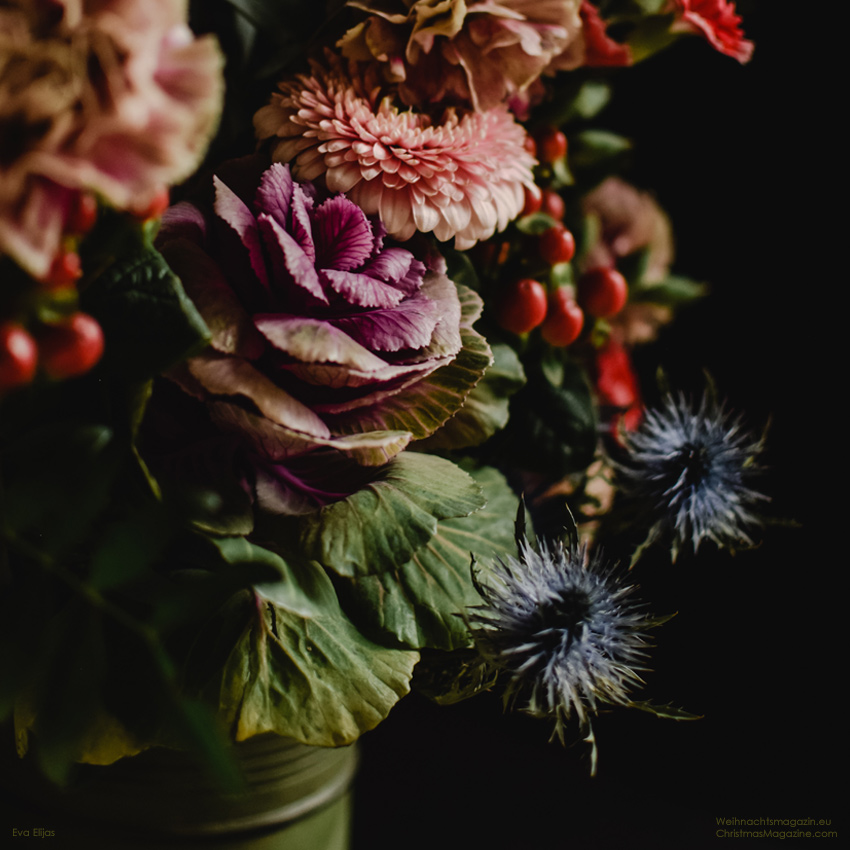
Salmon colored gerberas
Blue thistle
Ornamental cabbage
Red Hypericum berry
Eucalyptus
The flowers are loosely arranged and not grouped according to type in a cylindrical vase. The stems are also of different lengths. The shorter ones are slightly longer than the height of the vase. The rest have been added stacked.
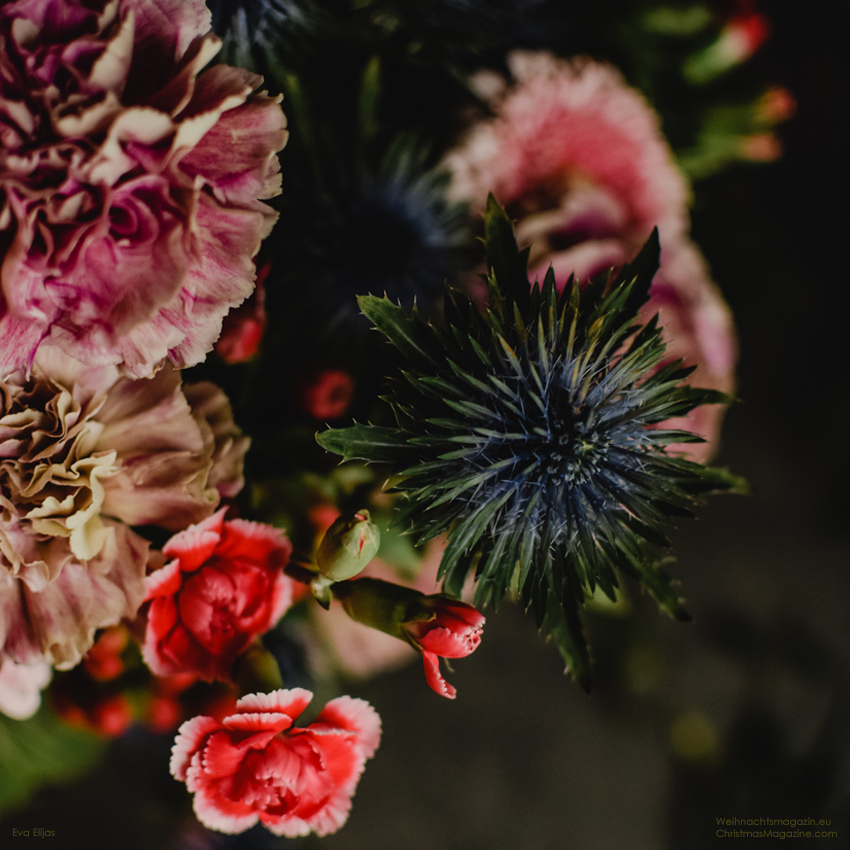
A bouquet like this cane last a week if the water is replaced every day. The vase should be kept away from a heat source.
John Greenleaf Whittier (1807-1892)
How strange to greet, this frosty morn,
In graceful counterfeit of flower,
These children of the meadows, born
Of sunshine and of showers!
How well the conscious wood retains
The pictures of its flower-sown home,
The lights and shades, the purple stains,
And golden hues of bloom!
It was a happy thought to bring
To the dark season’s frost and rime
This painted memory of spring,
This dream of summertime.
Our hearts are lighter for its sake,
Our fancy’s age renews its youth,
And dim-remembered fictions take
The guise of present truth.
A wizard of the Merrimac, –
So old ancestral legends say, –
Could call green leaf and blossom back
To frosted stem and spray.
The dry logs of the cottage wall,
Beneath his touch, put out their leaves;
The clay-bound swallow, at his call,
Played round the icy eaves.
The settler saw his oaken flail
Take bud, and bloom before his eyes;
From frozen pools he saw the pale
Sweet summer lilies rise.
To their old homes, by man profaned
Came the sad dryads, exiled long,
And through their leafy tongues complained
Of household use and wrong.
The beechen platter sprouted wild,
The pipkin wore its old-time green,
The cradle o’er the sleeping child
Became a leafy screen.
Haply our gentle friend hath met,
While wandering in her sylvan quest,
Haunting his native woodlands yet,
That Druid of the West;
And while the dew on leaf and flower
Glistened in the moonlight clear and still,
Learned the dusk wizard’s spell of power,
And caught his trick of skill.
But welcome, be it new or old,
The gift which makes the day more bright,
And paints, upon the ground of cold
And darkness, warmth and light!
Without is neither gold nor green;
Within, for birds, the birch-logs sing;
Yet, summer-like, we sit between
The autumn and the spring.
The one, with bridal blush of rose,
And sweetest breath of woodland balm,
And one whose matron lips unclose
In smiles of saintly calm.
Fill soft and deep, O winter snow!
The sweet azalea’s oaken dells,
And hide the banks where roses blow
And swing the azure bells!
O’erlay the amber violet’s leaves,
The purple aster’s brookside home,
Guard all the flowers her pencil gives
A live beyond their bloom.
And she, when spring comes round again,
By greening slope and singing flood
Shall wander, seeking, not in vain
Her darlings of the wood.